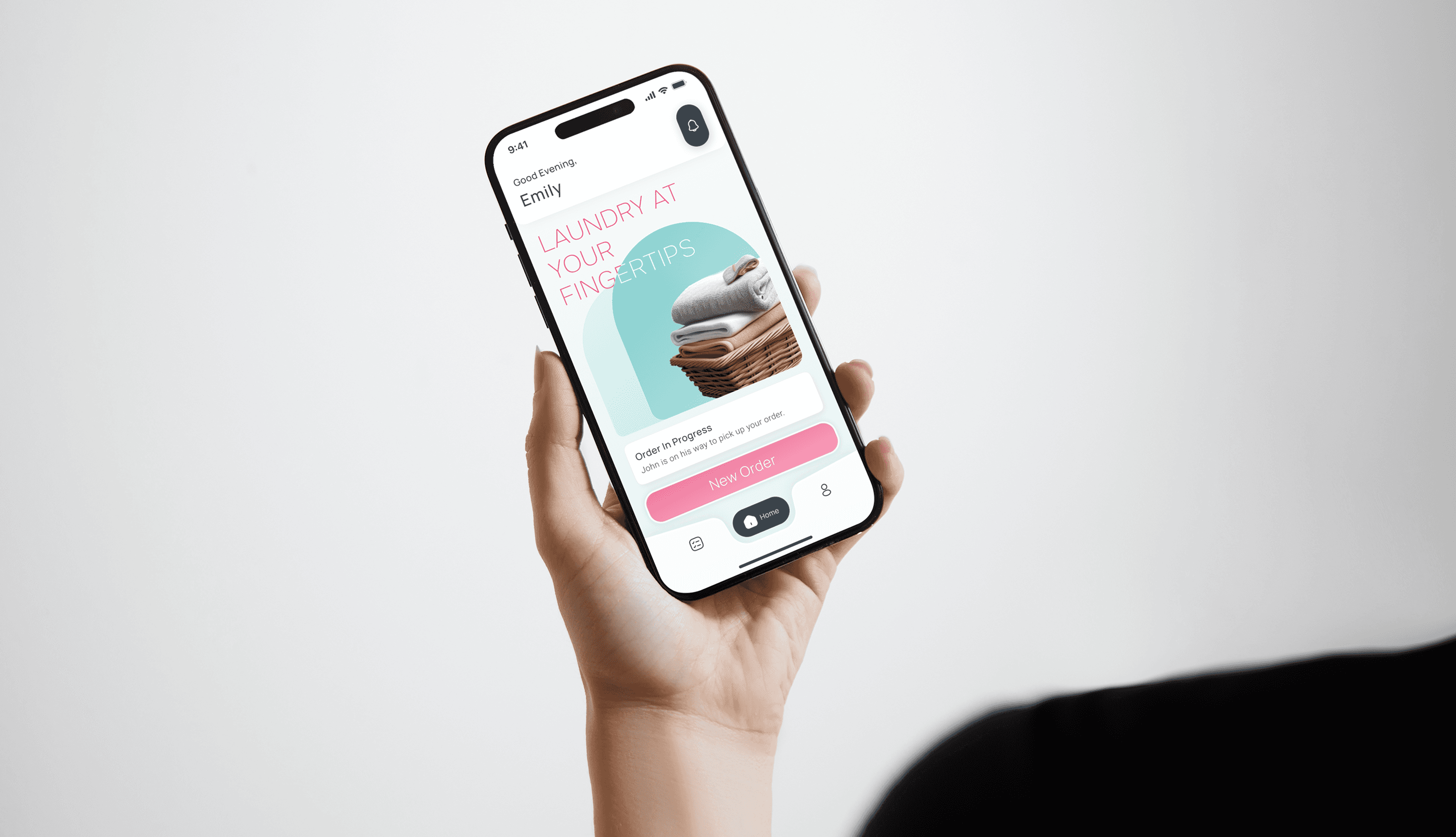
iProWash - Wash. Dry. Fold
Creating a laundry experience that feels simple, clear, and convenient
Laundry is something people interact with regularly, yet many service-based apps still feel overly functional and disconnected from everyday user behavior. The goal of iProWash was to design a mobile experience that makes laundry management feel easier, faster, and less frustrating.
The challenge was balancing multiple service flows, scheduling interactions, and order tracking without overwhelming users with too much information at once. The experience needed to feel lightweight and approachable while still supporting practical day-to-day actions.
My approach focused on simplifying navigation, improving interaction clarity, and creating a visual system that felt clean, calm, and easy to engage with.
Designing for convenience and everyday usability
The app was designed to help users schedule laundry pickups, manage orders, track delivery progress, and interact with services through a more intuitive mobile experience.
Instead of focusing only on functionality, the design aimed to make routine tasks feel visually friendly and less mentally demanding. Small interaction details, spacing, and hierarchy decisions were carefully considered to create an experience that feels calm and easy to navigate.
Identifying friction points in service-based apps
One of the biggest challenges with service applications is reducing the amount of effort users need to complete simple tasks. Many existing experiences feel cluttered, difficult to scan, or overly transactional.
The design direction for iProWash focused on:
- Creating faster and more intuitive booking flows
- Improving visual hierarchy for better readability
- Making order tracking easier to understand
- Reducing friction during scheduling and checkout
- Designing an interface that feels approachable and modern
The goal was not only efficiency, but also creating an experience that feels comfortable to return to regularly.
Exploring structure, flows, and interaction patterns
The process began by understanding how users move through laundry-related tasks, from scheduling pickups to managing active orders and delivery updates.
Early exploration focused on:
- simplifying navigation
- organizing service information
- reducing unnecessary steps
- improving clarity in order management
- creating a smoother booking experience
Different layout directions and interaction patterns were explored before refining the final visual system.
The visual direction focused on balancing simplicity with warmth. Since laundry services are part of everyday routines, the interface needed to feel clean and functional without becoming cold or overly technical.
A soft color palette combined with rounded components and structured spacing helped create a more welcoming interaction experience.
Typography was kept minimal and readable to support faster scanning and improve usability across different sections of the app.
Wireframes were used to establish layout consistency, navigation hierarchy, and content flow across the application.
The focus during this stage was understanding how users would move through:
- booking flows
- service selection
- order tracking
- profile management
- payment interactions
This helped simplify the experience before introducing final visual details.
Designing a consistent and scalable interface
A flexible component system was created to maintain visual consistency throughout the app while supporting different interaction scenarios.
Buttons, cards, navigation elements, service states, and order components were designed to feel lightweight, clear, and easy to interact with.
Consistency across spacing, typography, and component behavior helped create a smoother overall user experience.
Bringing the experience together
The final interface focused on clarity, usability, and creating a more visually approachable service experience.
By simplifying flows and reducing unnecessary visual noise, the app was able to support practical functionality while still feeling modern and easy to connect with.
The combination of structured layouts, softer visual choices, and cleaner interactions helped create an experience that feels more natural for everyday use.
Designing beyond functionality
This project reinforced how important simplicity and clarity are when designing everyday service experiences.
Beyond functionality, the goal was to create something that feels approachable, visually balanced, and easy to navigate without overwhelming users with too much information.
Working on iProWash also pushed me to think more intentionally about interaction flow, visual hierarchy, and how thoughtful interface decisions can make routine digital experiences feel smoother and more human.